Where an obstruction sits
A camera can show whether a visible blockage is near an access point or farther along the reachable pipe. A locating device may help the contractor mark a spot above ground when the equipment supports it.
Drain camera inspection · Minneapolis
One call connects you with a local contractor who can inspect the inside of your drain or sewer line.
CALL NOW: +1 877 364 0435One call to connect
Local drain contractor
Serving Minneapolis
You decide what happens next
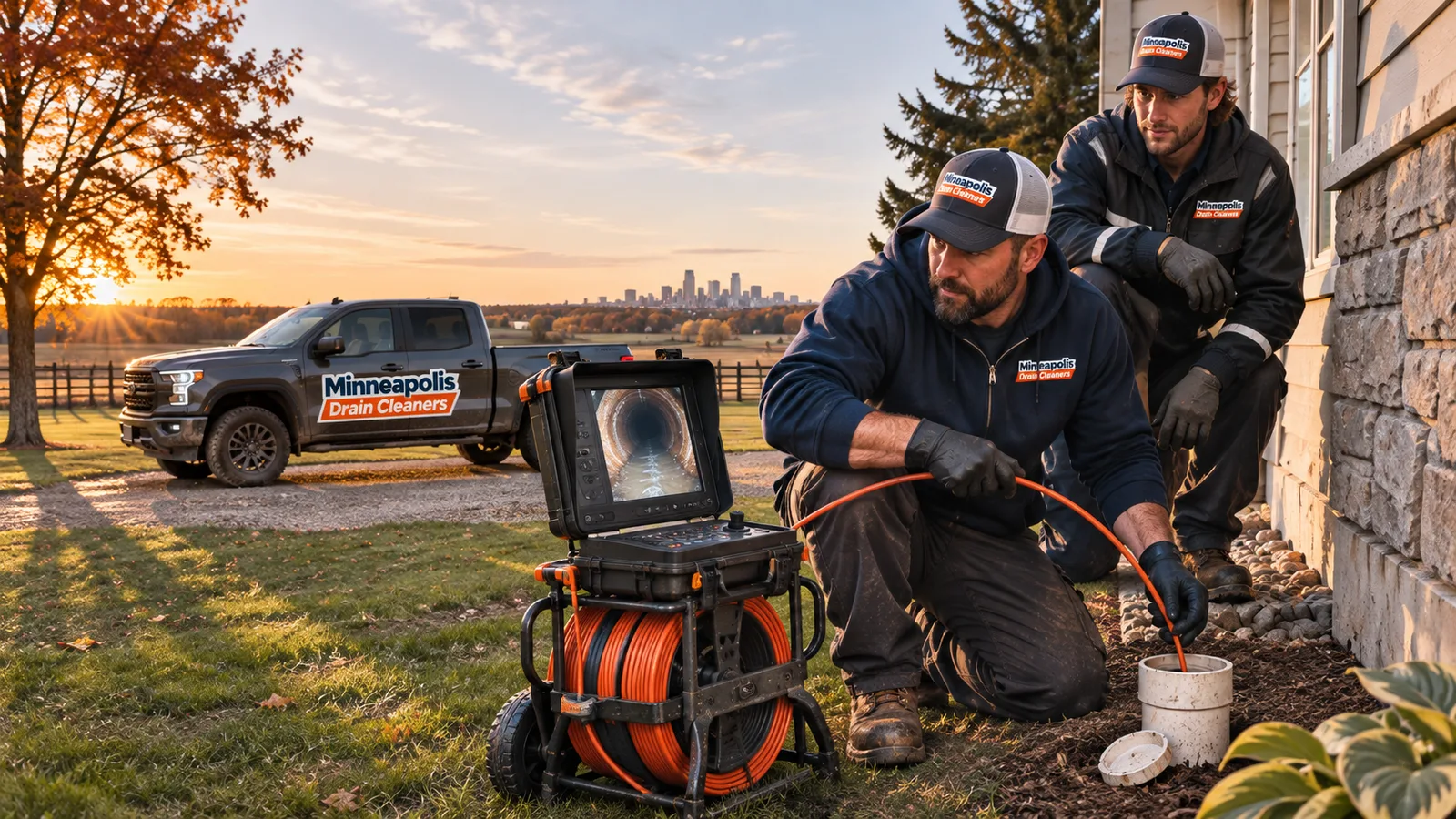
A drain camera inspection in Minneapolis gives a contractor a view inside a pipe that cannot be checked from a sink or floor drain. A small camera on a flexible cable travels through an accessible opening and sends live video to a monitor. It can show standing water, grease buildup, roots, a displaced joint, a cracked section, or an object lodged in the line. The view helps the homeowner and contractor discuss the next step based on what is visible rather than the symptom alone.
The contractor first asks where the trouble shows up. A single slow sink may point to a branch drain, while several fixtures backing up can direct attention toward the building sewer. They then identify a suitable access point, often a cleanout, and explain which stretch of pipe the camera can reach. A camera records what the lens can see; heavy deposits or a pipe full of water may limit that view. The contractor may recommend clearing an obstruction before inspecting farther.
In older housing areas such as Longfellow and Northeast Minneapolis, a contractor may encounter sewer lines made of different materials or joined in sections. The inspection can help locate a visible change in material or a problem at a joint. It cannot, by itself, establish the condition of every part of a buried line. Minneapolis Drain Cleaners connects homeowners with local drain companies serving Minneapolis when they want to discuss a camera inspection directly with a contractor who handles the work.
A camera can show whether a visible blockage is near an access point or farther along the reachable pipe. A locating device may help the contractor mark a spot above ground when the equipment supports it.
The video may reveal roots at a joint, corrosion, a sag holding water, or an offset between pipe sections. Each finding calls for a different conversation about clearing, monitoring, or repair.
When a recurring backup has been cleared, another camera pass can show whether the pipe is open and whether a visible defect remains. The contractor explains what the images do and do not establish.
One call connects you with a contractor serving the Minneapolis area. You talk with the contractor directly, get their quote, and decide whether to proceed.
Step 1 of 3
Call, enter your ZIP code, and you are connected with a local contractor who serves that area. You can talk directly about the drain or sewer line you want inspected.
Step 2 of 3
At the property, the contractor checks which fixtures are affected and looks for a cleanout or another suitable entry point. They explain the intended camera route and any access limits before the inspection.
Step 3 of 3
The contractor advances the camera, points out visible conditions, and discusses whether clearing, another look, or a pipe repair makes sense. You receive the quote from the contractor and choose what happens next.
If a drain keeps backing up, one call connects you with a local contractor who can discuss inspecting the pipe before you choose a fix.
CALL NOW: +1 877 364 0435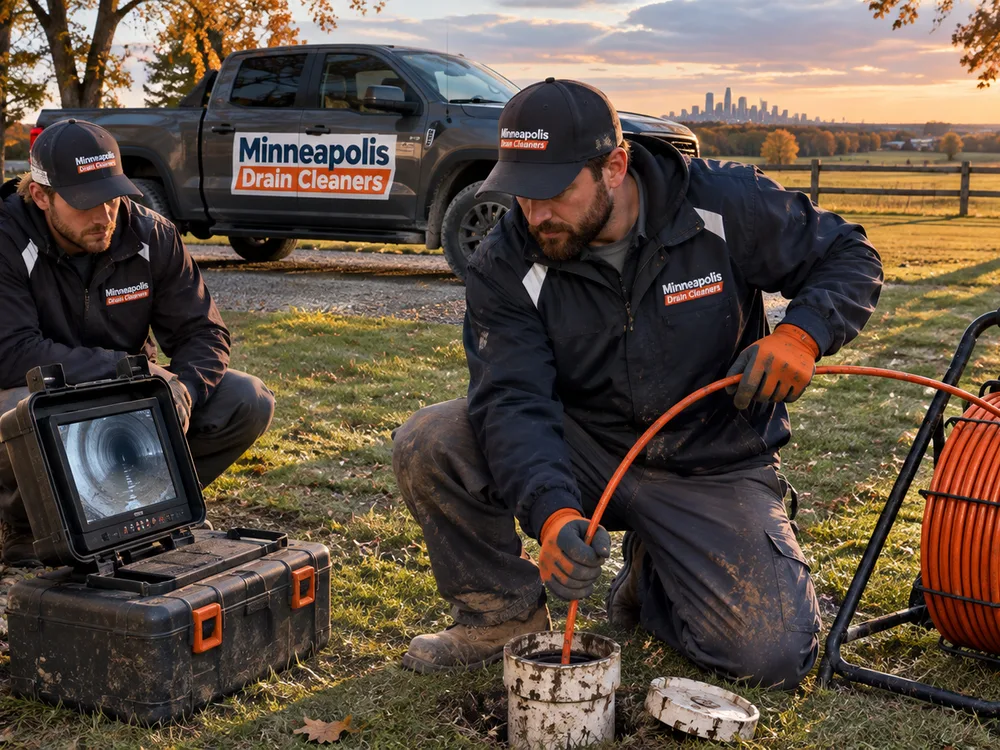
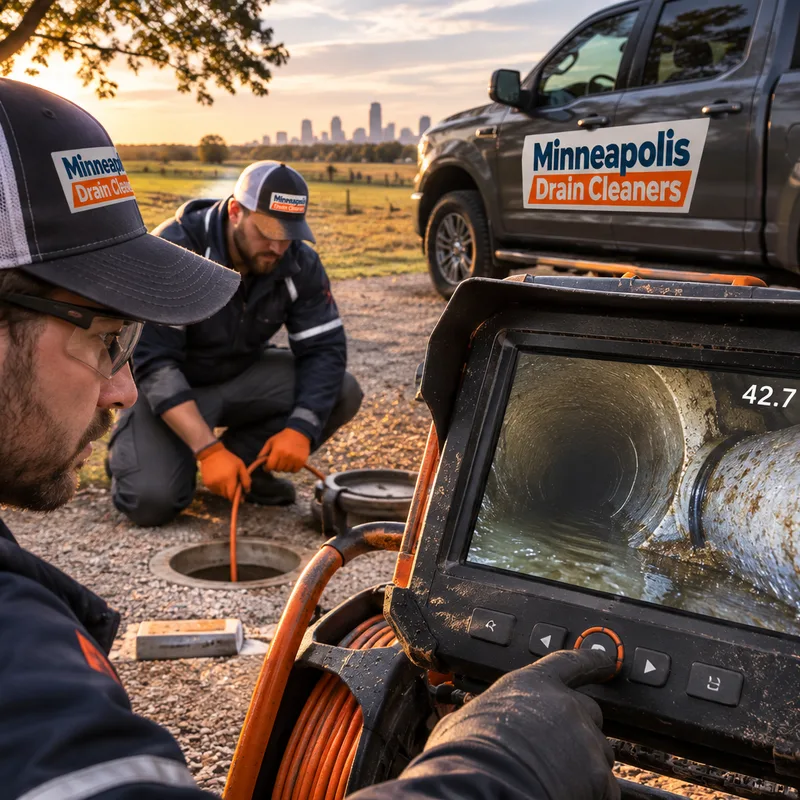
A blocked or water-filled line may need clearing before the camera can show the pipe beyond it. The contractor can assess the access and explain whether clearing is needed to get a useful view. If the immediate problem is a backed-up drain, drain cleaning addresses that separate task.
A camera can show visible defects, but the decision to replace a pipe also depends on its location, material, access, and the extent of damage. Ask the contractor to show you the relevant footage and explain which findings support repair, replacement, or continued observation.
A camera may reveal a visible blockage or damaged section, but video alone cannot confirm every source of an odor. Dry fixture traps, vent problems, and concealed leaks require different checks. The contractor can explain whether inspecting the drain is a useful starting point for the symptoms you notice.
Ask which line was inspected, how far the camera traveled, where a concern appears, and whether anything blocked the view. If the contractor recommends work, ask how the footage supports that recommendation and what access the work would require. You decide whether to proceed after discussing the findings and quote.
A buried sewer line can often be viewed through an accessible cleanout without excavation. Access depends on the property and the condition of the line; a collapsed section may stop the camera. The contractor checks the available entry points and explains any limits at the property.
One call connects you with a contractor serving Minneapolis and the surrounding area. Talk with the contractor directly about a camera inspection, review their quote, and decide what comes next.
CALL NOW: +1 877 364 0435